
Much like the “checklist” I had been given to do before I
could have had surgery, there were certain “prerequisites” (borrowing a term
from my engineering career), or preliminary activities required, before I could
actually start radiation.
One of the things Dr. Sayan told me I had to do prior to radiation was get a colonoscopy. My last primary care doctor was a believer in doing Cologuard tests—where you essentially send in a bit of poop and they tell you if you have colon cancer--as an alternative to colonoscopies. He thought this was better for me since getting a colonoscopy meant going off my blood thinners, which could potentially lead to my having another mini-stroke.
Now, however, a colonoscopy could not be avoided. I got my first colonoscopy was when I was in
my early 40s and my doctor was trying figure out why I had such low levels of
iron in my blood—even when I took prescription iron pills. The colonoscopy showed I had Celiac disease,
which was thought to be rare back then.
Since that diagnosis, I have been on a gluten-free diet and my iron has
returned to normal levels. Years after
my diagnosis, my cousin Joyce was found to also have Celiac but, unfortunately,
they only discovered it after she had cancer in her digestive system—which can
be a result of undetected Celiac. She
eventually died from further health complications.
Because of the Celiac, I had been getting regular
colonoscopies until I started seeing the doctor who suggested instead using
Cologuard. So now I had to get a gastroenterologist,
since I hadn’t seen one in years. After
returning to Florida, Dr. Jain, my primary care doctor, again came through and referred
me to Doctor Jathal, who also happened to be my wife’s GI doctor. I got an appointment for the following week. At that appointment he scheduled my
colonoscopy for about a month later.
With the colonoscopy scheduled, I could now focus on other
preparations for treatment. The Monday
after I had returned to Florida, I received information about the clinical
trial that Dr. Sayan had told me about.
I had several questions about the trial, mainly regarding whether my
existing medical conditions would preclude me from participating. I also had questions about how my progress
would be monitored and about required follow-up appointments. I also thought of more questions about the
timing and sequence of activities leading up to the start of radiation
treatment. I sent a message to Dr. Sayan
with all these questions along with a note officially acknowledging that I
would like to go forward with radiation and participate in the trial, assuming
I was eligible.
In another example of how efficient the process was working,
Jim, a research assistant, called me the same day I sent the message to answer
all my questions. Satisfied with all the
answers, we moved forward to schedule more appointments where I would sign
consent forms and get that PSMA-PET scan.
After my decision, I also sent a message to Dr. Wollin, the
Dana Farber surgeon, letting him know what I had decided and also thanking him
for being an important part of my decision process. He replied with a very nice note of his own.
The week before my first Dana Farber appointments, I had
received a consent form from Tempus, the company that was to perform the
genetic testing that was initiated at AdventHealth. Although I thought I had given that consent
back in January, I Docusigned my approval and sent it off.
Shortly after I returned from my first trip to Boston, I
received a call from a genetic specialist at Advent Health saying my test
results were ready. I called back to
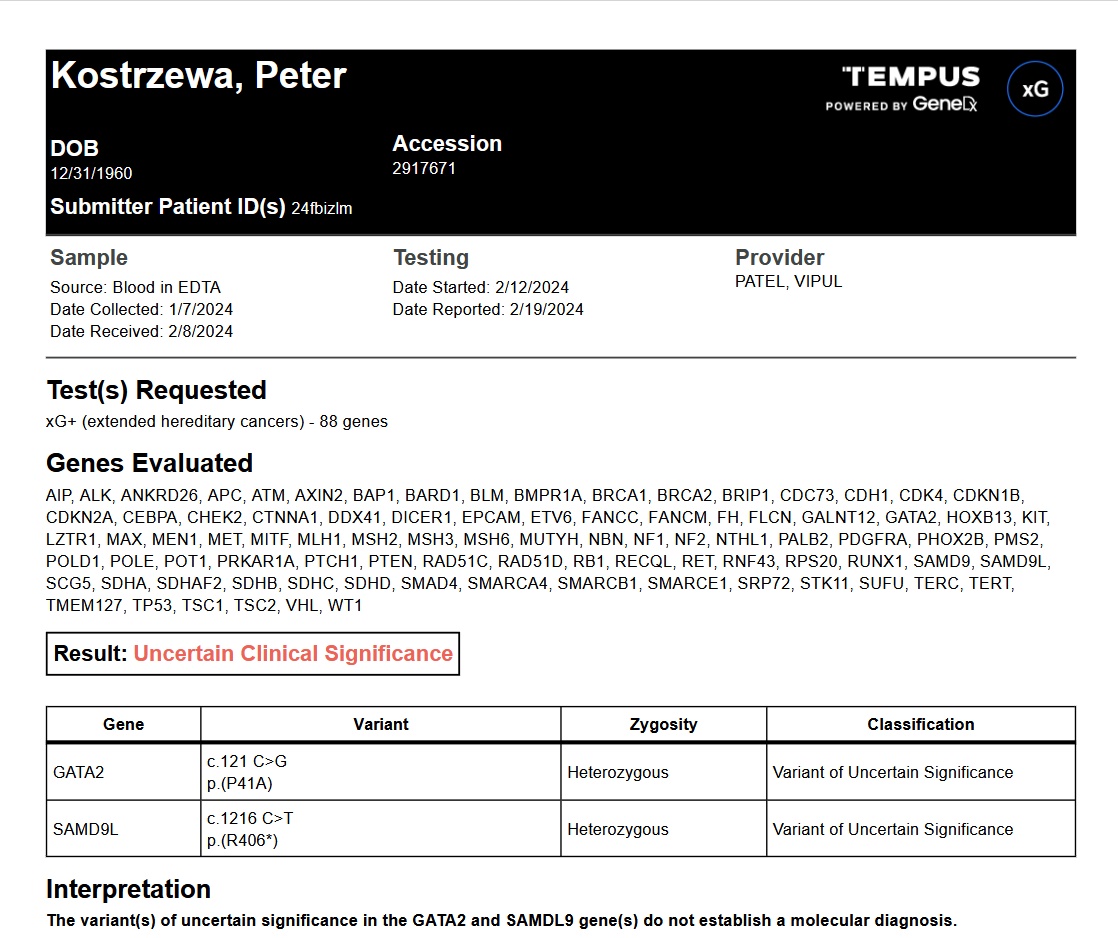
find the test of 88 genes found no genetic mutations. This included the key BRCA genes where a
genetic mutation meant a predisposition to prostate cancer in men (or breast
cancer in women).
This meant that my prostate cancer was NOT due to an
inherited genetic mutation. I guess this
should not have been a surprise as I had read that fewer than 10% of prostate
cancers were due to such a mutation.
However, with the family history, I assumed all the generational
prostate cancer had to be caused by genetics.
I asked the specialist what might explain all the prostate cancer in
Kostrzewa men if it wasn’t genetics. She
simply responded that there is a lot we still don’t know about cancer.
The report from Tempus noted that two genes had a “variant
of uncertain significance.” I asked both
the genetic specialist and, later, Dr. Sayan about this and, apparently, this
means pretty much what it says: no one knows if these variants are good, bad or
indifferent. At one point I looked into
making an appointment with Dana Farber’s genetics department to discuss this
but never did. Lacking information to the
contrary, I choose to believe these variants are a good thing.
My next Dana Farber appointments would be in early April to
first get the PSMA-PET scan, then get the results.
As Dr. Sayan had predicted, the scan would be covered by my
insurance. In order to be eligible for
the clinical trial, this scan had to come out “clean.” Of course, if that was not the case, any
treatment plans would need to be re-evaluated.
If the scan was okay, I could then sign the consent forms for radiation treatment
and the clinical trial.
Knowing I was coming in from out of town, Dana Farber
scheduled the appointments on consecutive days so that I could get the scan on
a Tuesday and get the results the next day.
This would maximize the productivity of this pretty short trip. The PSMA-PET scan would be performed back at
the Lifetime Center in Chestnut Hill, while the follow-up the next day would be
at the Mass General facility on Francis Street, adjacent to the Yawkey Center.
For most of this trip I followed the same blueprint as the March trip, flying Southwest into Providence the night before my first appointment, then staying with my brother and renting a car for my trips to Boston. I used the same North Providence Hertz place but, this time, I called first to make sure I didn’t get an electric car.
Late morning the day of the afternoon appointment for the
scan, John again drove me to North Providence to pick up my rental car. Once again, I took the pretty easy,
increasingly familiar drive up I-95 to Route 9.
I again arrived at the Lifetime Center with lots of time to spare.
A couple weeks after my first visit to Dana Farber in March
I received my first bill from them. I
was surprised to find how high the co-pay was: $450 for what was called a
hospital outpatient visit. At first, I
thought this might have been an error, as it seemed to me that the appointments
were more like consultations in a doctor’s office. I verified with my insurance company, Florida
Blue, that there was no error on their end but they said I could ask Dana
Farber if the bill was correct.

With lots of time before my appointment, I figured I’d see
if there was anyone there that I could talk to about the bill directly. There wasn’t, but they did refer me to the
phone number for the billing department.
Still with time to kill, I went and called them and got to speak to a
live person pretty quickly. The person
with whom I spoke assured me that this was how such visits were billed. Ultimately, I figured this was just the cost
of going to a world-class facility.
Further, I had already figured that the cost of my cancer treatment
would eventually reach the level of the out-of-pocket maximum of my policy so,
whether I paid now or later did not really matter.
Back in November, even before I knew what type of treatment
I would select, my marketplace plan “navigator” and I had done all the math
that resulted in my getting a plan with higher premiums but a lower
out-of-pocket maximum. This meant I knew
ahead of time what my worst-case medical expenses would be for the year. In any case, whatever the price was, the care
and support I got from Dana-Farber was a bargain.
When I was called in for my appointment, the scan process
started with an injection of contrast.
Since I had to wait a while for the contrast to circulate, they put me
in a comfortable chair in a room (or “suite” as I think they called it) that
included a TV.
As this was the day of the Red Sox home opener, I switched
the TV to NESN (New England Sports Network) and watched an emotional pre-game
ceremony dedicated to the memory of recently-deceased former Red Sox pitcher and
World Series Champion Tim Wakefield. I
watched long enough to see the Sox take a 1-0 lead on an early Tyler O’Neil
home run, then it was time for the scan.
I left my “suite” happy that maybe the Red Sox would get off to a good
start, not realizing they were on their way to getting crushed 7-1 while I got
my scan.
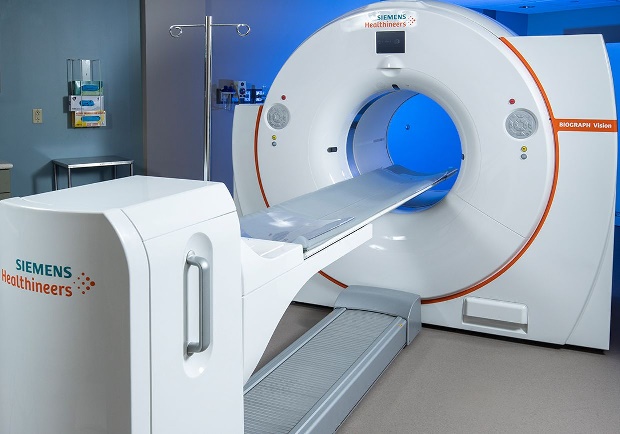
The scan itself was not different than a regular PET scan or
MRI. You lie down and they slide you
into a tube. Unlike an MRI, the tube’s
end is not enclosed and your head is in the open. It is also much quieter than an MRI. They said it would take 20 minutes, but it
seemed to be done quicker than that.
Whenever I’ve gotten a scan like this, because you have to
be still, I’ve always worried I would sneeze or twitch or something and they
would have to do it all again. No such
problems arose and soon I was done.
Once the scan was done I headed back to Cranston to spend a
little time with John, Carol and my nephews and anticipate the results of the
scan the next day.
The next day I had to go back to Brookline to get the scan
results. This time I was heading to Mass
General on Francis Street and the Radiation Oncology department. Again, I left Rhode Island early for my 12:15
appointment and, again, it was good that I did.
While the drive up was again fine, I ran into serious gridlock just
before the entrance to the Mass General facility. When I finally made my way to the
drop-off/valet parking area, I was told their lot was full. Luckily, there was a self-park garage down
the street I could use, but I wondered why they hadn’t simply put up a sign
that said “valet parking full” to save patients a lot of aggravation and
time. Apparently, the parking apparatus
might be one of the few weak points of Dana-Farber/Mass General.
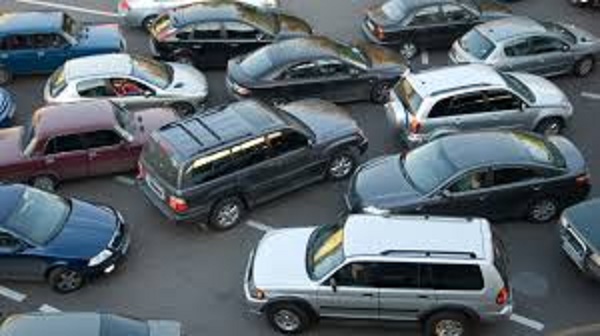
With my car finally parked, I walked back through the
gridlock to the entrance. Just to make
sure I was in the right place, I asked the front desk where the Radiation Oncology
department was. I was told to take the
elevator two floors below the lobby. This
wound up being a place with which I would become very familiar over the next
few months. I got my parking ticket
validated and took a seat, awaiting my appointment. My brain told me that, based on the biopsy, there
was every indication that the scans would most definitely show that the cancer
had not spread. Still, in the waiting
area my mind still wandered to scenarios that would not be favorable.
When I was called in, Dr. Sayan immediately told me that my scan was fine. No drama, no waiting to find out. That behind us, I signed the agreements for radiation treatment and the clinical trial. Dr. Sayan and Jim, the research assistant, explained the steps that would come next. Although we had previously discussed what needed to be done in preparation for radiation, I had questions about exactly how many more appointments I would need, how long it would take to get all the preparation done and when radiation would start. They answered all the questions I had.
Dr. Sayan and I further discussed where I might stay during my treatment. I told him I appreciated his offer to try get me into the Hope Lodge, for which there would be no charge, but I thought the somewhat communal setting would not be a good fit, partially because of Pat’s mobility issues. When I told him a hotel or rental might better accommodate our needs, he suggested I contact the Dana Farber lodging office which might help us find a place. He even offered to give me ideas about sights to visit and restaurants to eat at. One of his recommendations, Dolma Turkish restaurant, became one of my favorites.
After that meeting, with all the paperwork signed, it really
sunk in that my course had been set: I would be getting radiation treatment at
Dana Farber.
My next stop was back up on the main floor to get my
baseline bloodwork done. This was the
first of many blood tests I would have taken at Dana Farber. I found the process to be quite efficient and
I was all done in less than an hour.
After leaving the parking garage, I meandered just a bit before
finding my way back west. I chose to ignore
the Google directions that were trying to send me back through the city in
favor of the now familiar route west on Route 9. So I was on my way back to Cranston, delayed
only slightly by the moderate traffic.
That night, to reciprocate for the inconvenience of my staying at their
house, I treated the family to dinner at Legal Sea Foods where I could again
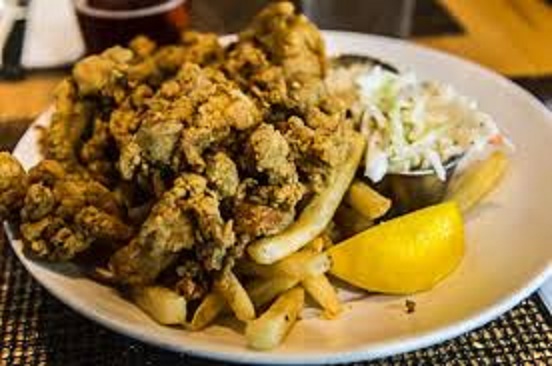
enjoy their gluten-free fried clams.
While my flight up had been inexpensive, the flights back
were not, for some reason. Given that, I
had decided to try to take advantage of my stepson Sean Michael’s benefit of
nearly-free standby flights for family members.
I guess they call them “non-revenue” in airline lingo these days. This is a perk he gets for working as a mechanic for
Piedmont Airlines, which is a subsidiary of American Airlines. He had given me access to his travel account
which allowed me to see information such as how many empty seats were available
on each flight and how many people intended to fly standby (most of whom would
get a seat before me because of their higher “priority” designation).
Flying standby out of a small airport like Providence
(which, by the way, is actually in Warwick and not Providence) turned out to be
pretty stressful. One thing I learned
was that, apparently, lots of flights fill up just a day or less before they
leave. That means checking for available seats earlier than the day before a flight is somewhat
pointless (but I did it anyway, of course).
Prior to my trip, I had scoped out what flights could get me
back to Florida and several had a fair number of seats open. The day before I needed to leave, however,
all the flights out of Providence had no seats available and many had a
negative number of seats, meaning they were overbooked. The availability got worse later in the day
and still worse later in the week. Pat
was heading out for a cruise with her friend in a couple days, so an extended
stay in Rhode Island was not really an option.
I started semi-panicking and exploring all kinds of
scenarios to get back to Florida. Maybe
I could get to Hartford, Connecticut and fly out of there? Maybe I could rent a car and drive to
Philadelphia, where there were lots of open seats on flights to Orlando? Could I just rent a car and drive to
Florida? How about a train? By now, one-way flights would cost upwards of
$700-800 if I just wanted to buy a ticket, but that was looking like my only
real option.

I talked to Sean Michael who suggested I go the airport well
before dawn and see if I could get on any flights. He also found out that he could book me as a non-revenue passenger on non-American Airlines flights although, on those
airlines, he wouldn’t have visibility into how many seats were actually
available.
Ultimately, we took a multi-pronged approach where he booked
me on a JetBlue flight at 6am and I awoke at 3:30am or so to go to the
airport. I would drop off my rental car
and then proceed to the gates to try to get on American flights starting at 5:45am. The JetBlue flight actually would have been
preferable, as it flew directly to Orlando while the American flights went to
Philadelphia, Washington D.C. or Charlotte where I would need to get another
flight to Orlando.
By 4:30am I had gotten through the sparse security line with
the temporary boarding pass “non-rev” passengers get. I headed to the JetBlue gate and found it
unstaffed. This was unsettling, but
maybe not unexpected, as there was still an hour and a half before the
flight. As I waited, I kept checking the
American flights and saw there were actually a couple available seats on a flight to
Philly.
At 5:00am, with still no JetBlue personnel in sight, I
couldn’t stand it anymore and booked the 5:45 American flight on my phone. I then walked over to the American gate to
see if I could actually get on it. The
desk there was also vacant, but had a sign saying to go to a different
gate. I went to that gate to find it was
for United Airlines, which certainly did not seem right. I walked back and re-read the sign, then
returned to the United gate. I fully
expected to be told, once I got through the line, that I was in the wrong place
and/or there was no seat for me anyway.

As it turned out, they had had some sort of technical issue
at the American gate and the United folks were letting the American employees
use their terminal. When my turn came, a
pleasant and helpful woman explained the situation and happily handed me a
boarding pass. This meant I was assured
a seat on the flight to Philly and I was relieved.
I didn’t bother going back to JetBlue to see if I could
still get on their flight. Technically,
if I got on that one, I could cancel the American ticket and not worry about
the layover and connecting flight in Philly.
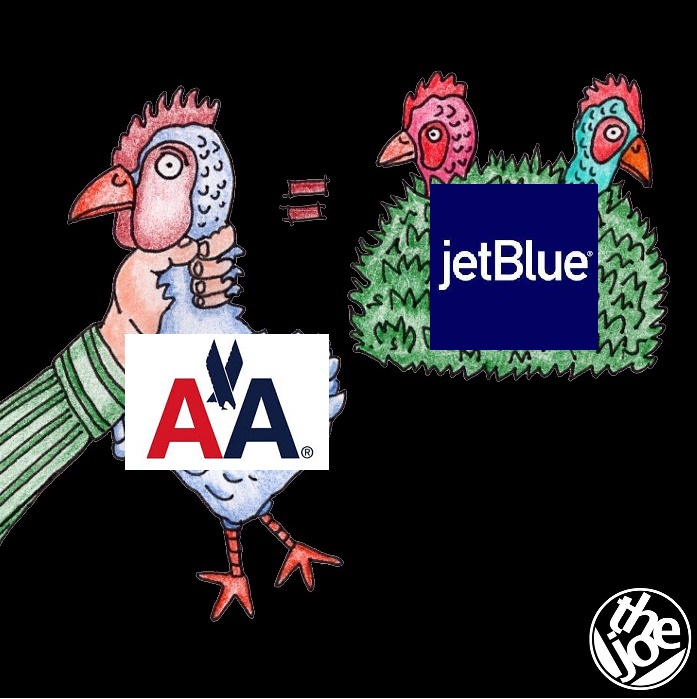
At this point, I figured the “American Airlines in the hand” was better
than “JetBlue in the bush”—and potentially getting stuck in Warwick (not that I
don’t love Rhode Island).
JetBlue automatically canceled my ticket and I received a
refund. In Philadelphia, I easily got
another standby ticket and headed back to Florida. During the layover, I was able to try the
Taco Bell-esque Qdoba restaurant and, quite frankly, it wasn’t very good.
So I ultimately got my cheap flight, but I quickly
questioned whether it was worth the stress and uncertainty. I guess I decided the answer was “no” because
I only did the standby thing once more and just bought regular tickets for all the
rest of my flights.
After deciding not to pursue staying at the Hope Lodge, at
Dr. Sayan’s suggestion I contacted the Dana Farber lodging department. I had already assumed staying in Boston for a
month and a half would cost quite a bit and had been looking into local hotels
and AirBnBs. One annoying thing I found
about AirBnB is that they don’t actually tell you the exact location of the
property you’re looking at, only the general area.
When I contacted the lodging office, they informed me that Dana Farber also has a Resource office that provides subsidized room rates for patients spending significant time in the Boston area. In sum, the lodging office could book hotel rooms at a steep discount, but the resource office could book rooms at the ridiculously cheap rate of $45 per night for a Boston hotel. To qualify for the lower rate, your income had to be limited but, since we are retired and only receiving social security—plus Pat’s pension and a bit for the software consulting I was doing—we met the criteria.
So now, instead of paying up to $10,000 a month
for an AirBnB in a location I wouldn’t actually know until I booked it,
Dana Farber was
going to help me get a nice hotel room for a fraction of the cost. Once I had received my radiation schedule, the
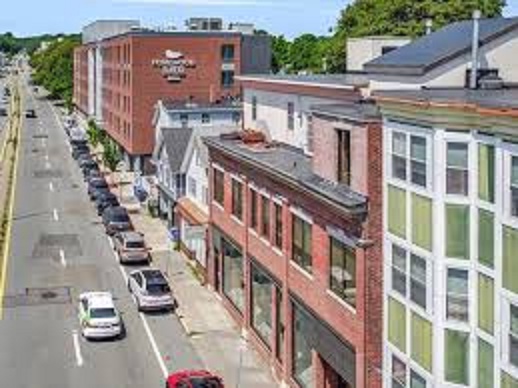
Resource Office was able to book me into the Hampton Inn on Mass Ave at the $45
rate for the duration of my treatment.
Although the hotel was about 3 miles from where I would get
treatment—and therefore not within easy walking distance—they had a shuttle
that would take me to my appointments.
The hotel was actually in Roxbury which I remembered as being one of the
“bad” parts of Boston when I lived in Massachusetts. I figured, like other
areas, it might now be a more attractive place to stay. Also, I couldn’t argue with the cheap rate I
was getting.
With a hotel booked, I was happy that a major worry about
the trip was resolved. At least that was
the case until I had a phone conversation with Cheri, one the nurses in charge
of my care. Although the call was mostly
about instructions for my imaging appointment and subsequent treatment, she
also asked where I would be staying.
When I told her, she responded by saying we had to have a “difficult
conversation.” She started by telling me
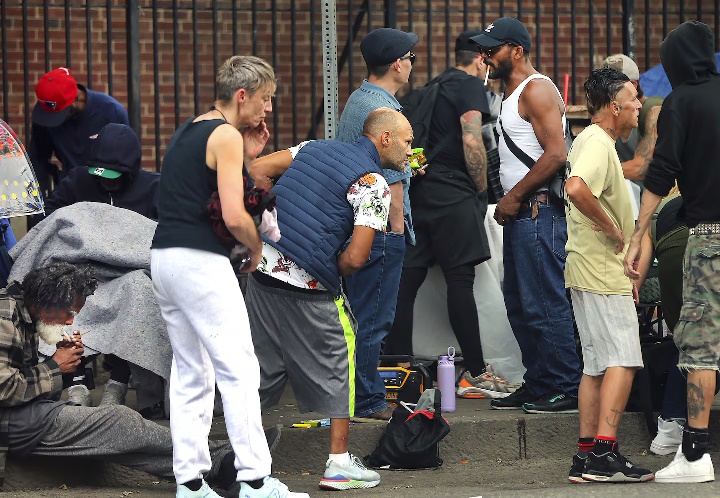
that the area in which I would be staying was “not safe” and “across the street
from heroin central” in Boston. She took
the time to explain, in detail, the places that were safe, the directions where
walking would be okay and so on. She did
add that she hadn’t heard about any patients who had stayed there ever being
attacked. I thanked her for all that
information.
After that call, I thought about the idea of having Pat and,
possibly, relatives and friends visiting me across the street from “heroin
central.” I quickly decided that I would
rather pay full price for a hotel in a better location. By now, I had learned that there was a
Homewood Suites hotel less than a mile from where I would be treated and it was
in Brookline, a really nice area. I knew
it would cost more, but I figured it would be worth it to be in a safe place. I emailed the Resource office again, thanking
them for their efforts, but voicing my concerns about the booked hotel. I said I would be looking for something
else.
The response was that Dana Farber had an agreement with the
Homewood Suites as well, but they could not get the cheap rate for the duration
of my visit. As one would expect, only a
certain number of rooms are allocated for patients. This was why I had been booked into the other
place. I was very surprised to find that
the $45 rate also applied to Homewood Suites, for the nights it was available.
In the end, the Lodging office and Resource office worked
together to book nearly my entire trip at whatever the best rate they could get
was, based on availability. I believe
there might have been one night when I had to pay the regular rate. Again, I was amazed how all these Dana Farber
employees, from the nurse to the lodging and resource coordinators, had worked
so hard to ensure I had the best experience for my treatment. I can’t imagine how much better the quality
of my entire trip was thanks to these dedicated people. The Resource Office even provided me with a
$250 gift card that could be used for groceries and gas on the trip.
About a week and a half after signing up for the clinical
trial for the hormone treatment, I got a call from Dana Farber informing me that
I had been randomized to the “standard of care” arm, rather than the
experimental arm, of the trial. This
meant that I would be getting the hormone treatment that came with hot flashes
and the other side effects, rather than the one that was not supposed to have
those effects. I was disappointed, but
not really disheartened as this would be just another obstacle on this journey. In effect, I lost another coin flip, as I’ve
already said I expected, given my luck.
After the “clean” PSMA-PET scan, I had one more prerequisite
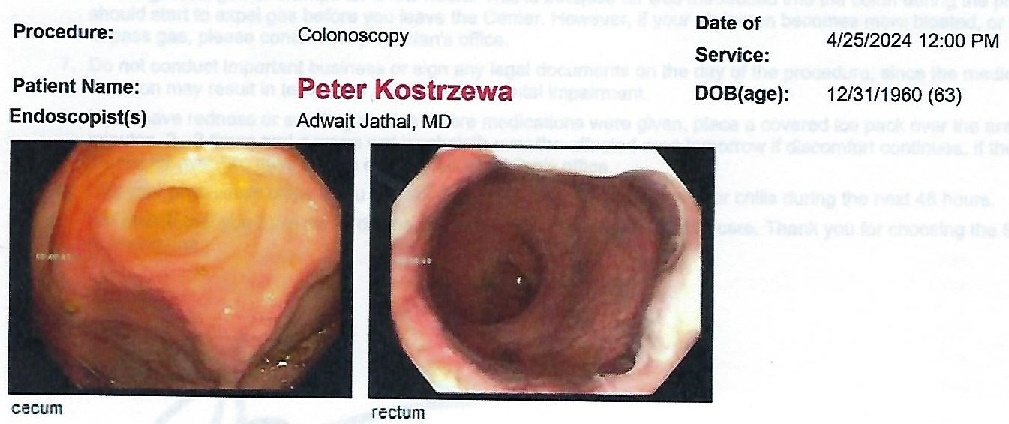
to fill before I could be cleared for radiation treatment—a colonoscopy. I mentioned how impressed I was with how
quickly my primary care physician, Dr. Jain, and my new gastroenterologist, Dr.
Jathal, got one scheduled. The process
was as usual with the unpleasant prep and starvation prior to the
procedure. Everything went fine with no
problems or polyps found. I was amazed
at how whatever anesthetic they used—Adavan, I think—left me with no groggy
after effects. I just went to sleep and
woke up feeling fine--and starved. Pat’s
friend, Lynn, helped out by picking me up since Pat had an appointment of her
own. My post-colonoscopy lunch was some
mediocre Greek food that I quickly scarfed down. Another step in the preparation was
completed.
After I reported successful completion of my colonoscopy to
Dr. Sayan, I received a call to talk about the next steps. First, I would start the hormone therapy with
an injection and a prescription for daily pills. After that would be insertion of the gold
markers, or “fiducials,” that would help target the radiation correctly. In addition, an injection of the SpaceOAR rectum-protecting
gel would be performed. All this would
occur within a two-day visit.
Initially, I had planned to just fly directly into Boston
and take rideshares to my appointments.
However, when I discussed this on the phone with a nurse, I was informed
that, because the fiducial insertion would require sedation, someone would need
to accompany me to that appointment. Apparently,
an Uber or Lyft driver would not qualify.
To this point, I had tried to be as little a burden as
possible to anyone during this process—except of course, to my brother, John,
and his wife, Carol, and my nephews with whom I had been staying during the
trips. I had rented a car and driven
into Boston for all my appointments thus far, but now I needed someone to drive
me in. Even worse, the appointment was
at a Mass General facility near the heart of Boston, rather than on the outer
edges, in Brookline or Chestnut Hill.
Worse yet still, the appointment was at 8:30 in the morning, which meant
battling Boston traffic to get there.
Luckily, my brother John quickly offered to drive me in, solving that
problem. So, a couple weeks after the
colonoscopy, it was time to head back north, to Rhode Island and Boston,
again.
Likely because I waited too long to finalize my
arrangements, flights from Orlando to Providence were, again, pretty
expensive—between $300 and $400 one way on Southwest, more on JetBlue. Here, I again turned to Sean Michael and his
airline perks for help. There was no
apparent way I was getting on an American Airlines flight non-revenue to
Providence, so we looked at Southwest.
Sean Michael was able to book me on a flight arriving the night before
my first appointment. For backup, I went
and bought a pricey ticket on that same flight.
This way, I figured, I’d be sure to get to Providence one way or another.
It was little strange to have two tickets and two boarding
passes for the same flight. Since I
worry about everything, I wondered if Southwest would spot this situation and
bar me from any flights, or something.
Or maybe TSA would flag this anomaly and stop me at security. I also wondered whether, if the flight was
full, I could cancel my paid ticket, thus opening up a seat for myself and my
nearly-free ticket. It never came to
that, as the flight was not full and I got my legitimate non-revenue boarding
pass. With my place on the plane
assured, I just canceled the paid ticket while I waited to board (and used the
credit for future flights).
Flying standby also means boarding last on Southwest, where
there are no assigned seats. I had
already accepted the fact that I would be in a terrible middle seat, likely
between two Sumo wrestlers. However,
when I walked on the plane, I saw a glorious aisle seat next to an elderly
couple near the front of the plane.
There was even space for my carry-on.
The airline gods were truly smiling on me that evening.
The only problem with my cheap flight was that it was
running late and would not arrive until after midnight. Since my appointments the next day didn’t start
until after noon, this wasn’t a big problem.
What was a problem was that, this time, I would be picking up a rental
car at the airport and the Hertz rental counter was scheduled to close at
12:30.
For a small airport like Providence, the rental counters are
surprisingly far away from the gates. Once
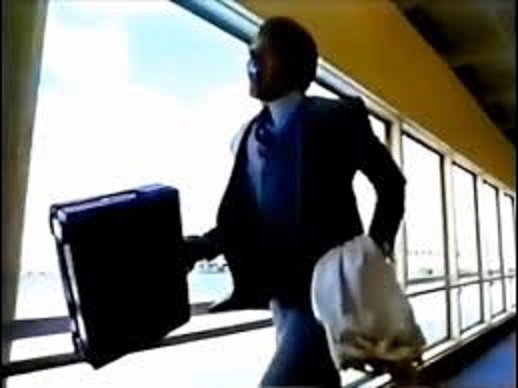
I got off the plane, I did my best OJ Simpson impression (i.e. running through
airports like he did in an old commercial, not other things he did) to get to
Hertz as fast as I could. As I caught my
breath, the rental agent explained that the counter stayed open for an hour
after the last flight gets in, so, apparently, I didn’t have to run.
Once I got the car, a pretty new—gas-powered—Volvo, there
would be one more problem. When I got to
the exit gate, there was some type of paperwork issue. The “gatekeeper” had to get the cars behind
me to back up so I could get out of line and drive back to the rental counter. After I got new documents, I was finally on
my way out of the airport in the wee hours.
My first appointment wasn’t until after noon, but I again
left pretty early. Once at the Yawkey
Center, I self-parked to avoid the potentially mean valet cashier.
I started the day by getting blood drawn for the first time
at Dana Farber (in April, it had been done at Mass General). Despite there being a big room full of people
all waiting, things moved pretty quickly and they were done with me by noon.
My next appointment was at 1 p.m. on the 11th
floor. The first part of the visit was
with Jim, the research assistant who had answered all my questions about the
clinical trial for which I had signed up.
He also had me sign all the trial paperwork in April. I started by filling out a questionnaire
about a variety of lifestyle and health issues, such as exercise, drug and
alcohol use, current pain and fatigue levels, bathroom issues (for lack of a
better term) and sexual function.
Next, Jim gave me a standard cognitive exam with questions
such as what day it was and what state I was in. Having gotten into Rhode Island after midnight, my impulsive
thought process was that I had arrived on Tuesday and this was the next day, so
I said “Wednesday.” I quickly recovered
and said “Tuesday,” giving the excuse that I arrived so late I lost track of
days. I came close to saying we were in
Florida or Rhode Island but took a second and correctly answered that we were
in Massachusetts. Still, it felt like the
test was off to a bad start.
For the next test, Jim had me draw a clock showing 10 minutes of 11. I had seen this test before on the TV show “Hannibal,” where the cannibalistic doctor used it to diagnose his patient with Schizophrenia. Despite my familiarity with the test—and my extensive knowledge of psychology due to my minor from U. Lowell—I drew the hands of the clock without the numbers. When Jim asked “how about the numbers,” I feared my performance was about to get me referred to a psych ward.
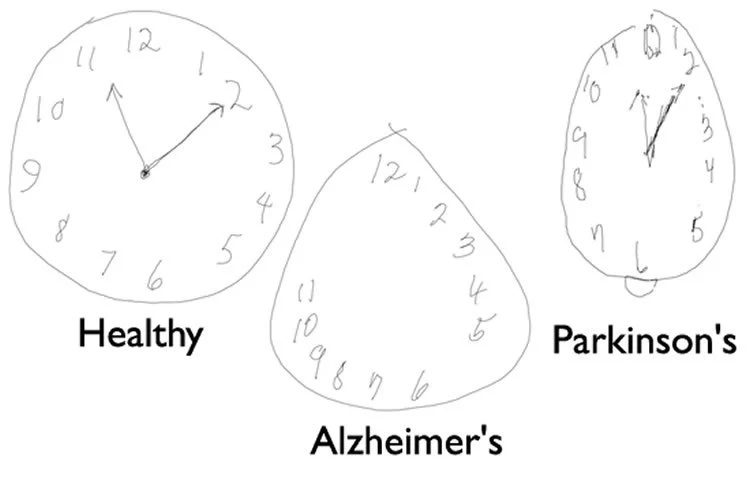
After successfully filling in the numbers on the clock
drawing, the rest of the testing went better.
When prompted, I was able to name way more than 10 animals in a minute,
meaning I passed that test. I was also
able to repeat back the 5 words Jim told me to remember at the start of the
session. It seemed I would avoid further
psychological analysis.
My next stop was to see Patrick, a CNP, who went over the
now somewhat-well-known-to-me expected results and side effects of the hormone
treatment. Testosterone, which is the
fuel for prostate cancer, would be cut off completely, likely resulting in
fatigue and denying me the things for which you would normally need
testosterone.
Apparently, I was starting with a high testosterone level,
meaning there was a better chance of recovery after the end of the temporary
treatment. Hormone treatment was being
started about 6 weeks before starting radiation to stop the cancer from growing
and make the radiation more effective.
I was impressed that Patrick already had my blood work
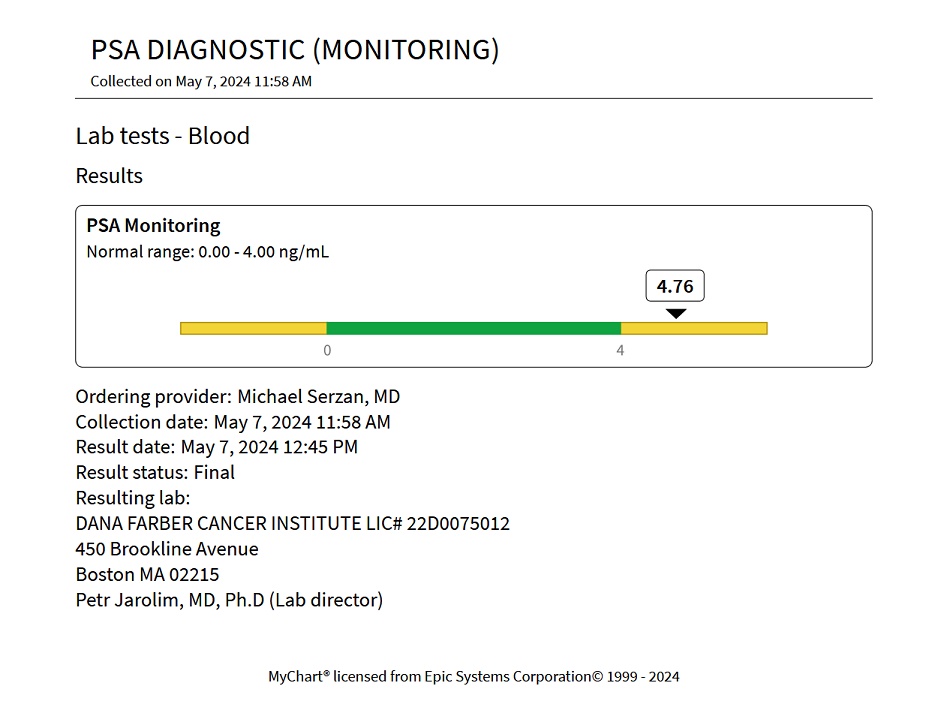
results about an hour after the blood had been drawn. I was less impressed to find my PSA had
climbed to 4.7, now in the “red” area and more than 50% higher than it was when
I was first diagnosed with prostate cancer the previous fall. I thought of what good fortune it was to have
found out about the cancer early since it was apparently growing rather
quickly.
Next was the first hormone injection. This was pretty much a non-event with a quick
and virtually painless shot in the butt.
After those few seconds, my treatment had officially started.

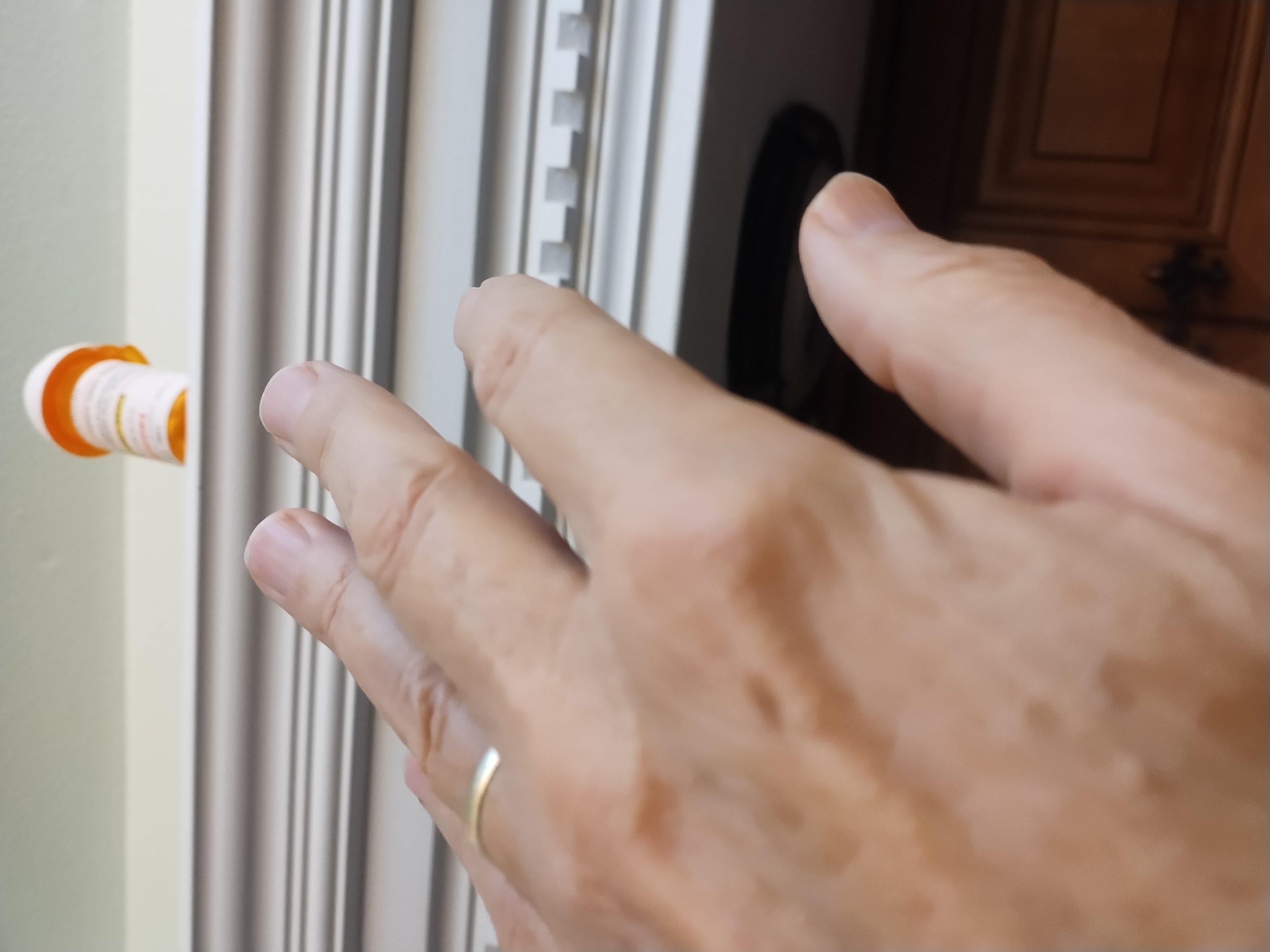
After the shot, all I had to do was pick up my pills at the
pharmacy downstairs from my appointments at the Yawkey Center. It was at this point that I ran into my
second disappointing experience at Dana-Farber—after the rude parking
cashier. I waited in the short line at
the pharmacy to find they had no record of my prescription. This was a surprise, since it was supposed to
have been sent down about 45 minutes earlier.
At the suggestion of the person at the window, I tried the clinical
trial line, since I was in a clinical trial (even though I wasn’t getting the
experimental drug). With no luck there
either, I headed back up to the eleventh floor, to where I had just had my
appointments.
I was able to communicate to someone at the reception desk the
situation and, apparently, the prescription was re-sent. Back downstairs I went. This time, they had record of the
prescription but it wasn’t ready yet. I
believe it was ultimately about an hour and a half from when I first got to the
pharmacy until I was able to pay my $10 co-pay, walk out with my pills and head
back to Rhode Island.
Since John would be driving me to my appointments the next
day and to the airport the day after that, I only needed the rental car for one
day. I decided to gas it up in Cranston
before returning it to the airport.
After an embarrassing experience where I had trouble figuring out how to
open a rental car gas tank cover in February, I decided to make sure I knew how
to access the tank before leaving the house.
Confident I could open and close that little door, I drove to a local
gas station.
At the pump, I encountered yet another embarrassing
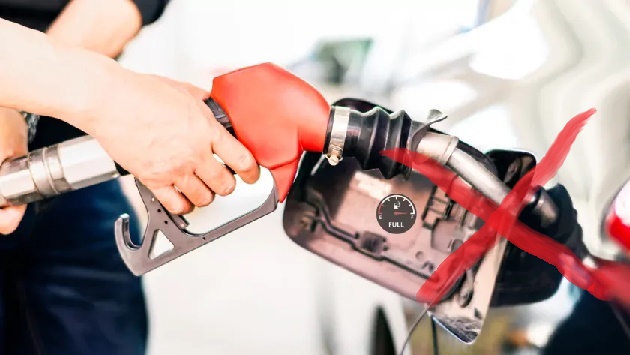
situation. The hose would not go all the
way into the tank. After fiddling around
with it for a while, I thought maybe it was in far enough to get gas into the
tank. It wasn’t. As soon as I squeezed the trigger, the pump
would click off. After repeated attempts,
I gave up and paid the couple dollars that read on the pump. Defeated, I closed the gas tank cover and
drove back to my brother’s house.
I decided I needed to research this gas tank problem, but
found no owner’s manual in the glove compartment. Apparently, the manual was digital and
accessible from the car’s “infotainment” system (or whatever they call it). Unwilling to try to figure out how to
navigate through the manual while sitting in the car, I went inside and got my
laptop.
Ultimately, I found a digital copy of the manual for my rental car online and was able
to discover the problem. Apparently,
this Volvo has a security feature whereby, once the gas tank door is opened,
you only have a few minutes to put gas in it.
After that, access to the tank is locked out for 15 minutes. Apparently, when I tested my ability to get
to the tank, I started the fill-up timer and was locked out by the time I got
to the gas station. I’m not sure exactly
why they need this feature. Maybe it is
meant to prevent siphoning, somehow? In
any case, despite not having a nice, old-fashioned paper owner’s manual, I was
able to defeat this “security” feature and fill the tank—after I made sure not
to touch the tank door for 15 minutes before I tried to fill it.
After a nice afternoon and evening with John, Carol and my
nephews and a good, albeit short, nights’ sleep, it was an early wake-up to go
into Boston the next morning. I offered
to at least drive into Boston, but John insisted on driving while I
navigated. I think we left between 6 and
6:30. The traffic was heavy, but not
stagnant, as inched our way through the city.
After convincing John to trust the Google directions and exit Storrow
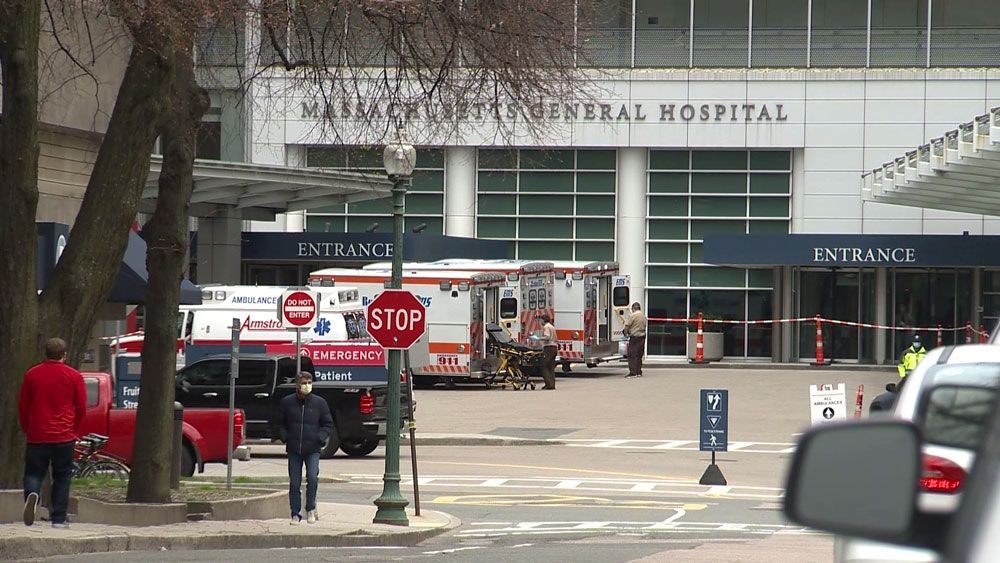
Drive in the right place, we successfully arrived at the Mass General facility on
Fruit Street in plenty of time for my 8:30 appointment.
As we emerged from a side street and pulled up towards the
massive, somewhat circular drop-off area, I immediately recognized the
facility. I think I had brought my
mother here during her very short bout with liver cancer. Or I might have brought my father here when
he was dealing with his jaw deteriorating.
Maybe I was here for both but, either way, the chaotic scene of
seemingly hundreds of people being dropped off or picked up was very familiar. Being able-bodied individuals, we were able
to avoid that sea of patients and caregivers and turn directly into the parking
garage.
Once inside, we quickly found where I needed to go and I got
checked in. We were still very
early. After a bit, my name was called
and I was guided to the changing area.
Here I found another little Mass General/Dana Farber special
nuance. In every other hospital I’d ever
been in, they gave you those horrible little gowns that are impossible to tie
and always leave your butt or some other part of you exposed. Here, however, they give you TWO gowns and
you put one on forwards and one backwards so you feel totally comfortable and
covered up. I guess doing that means
they have to do twice the laundry, but, apparently, they feel patients’ comfort
and dignity are more important. I
wondered why other hospitals didn’t do this simple thing—I guess they want to
save money by having half the laundry to do.
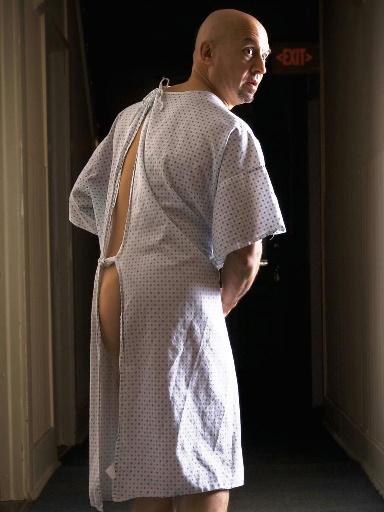
Eventually, John was directed to a waiting area with wi-fi where he could do some work. Shortly thereafter, I went in for more bloodwork, then the procedure. After they explained everything they were going to do again, anesthesia was administered and, next thing I knew, I was awake and alert and feeling fine. The process was finished mid-morning and didn’t take as long as they had predicted. Everything was professional and efficient and everyone was nice and friendly. Now I had my gold-plated prostate “goalposts” and injected “butt cushion” and was almost ready for radiation.
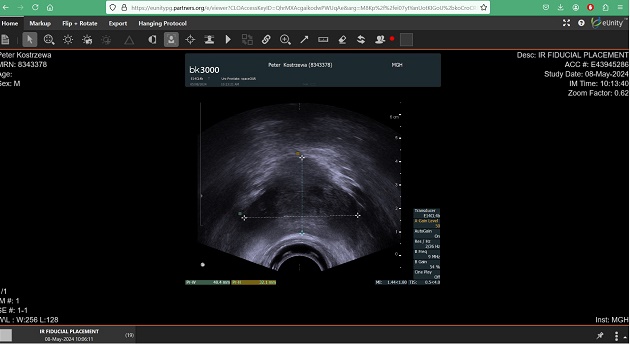
They did warn me that, for a day, I would likely feel
unusual pressure on my butt due to the SpaceOAR injection. That evening, after a nice family Mexican
dinner, that was the case. It kind of
felt like you always have to go to the bathroom and nothing you do stops that
feeling, making it difficult to sleep or even relax. The feeling went away after that night, as
expected, but then occurred again after I got home, which worried me. I called Dana Farber and talked to the nurse
on duty. We went over the steps I would
need to take if the feeling persisted, which might have included seeing a local
doctor, going to an emergency room, or even returning to Boston. Luckily, I had to do none of those things as
the sensation again went away.
After my procedure, I still had the better part of the next
day before my flight back to Florida.
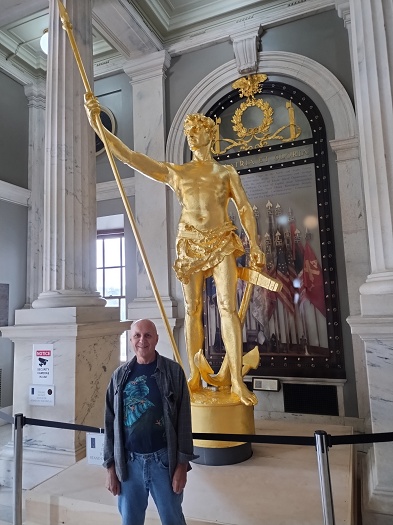
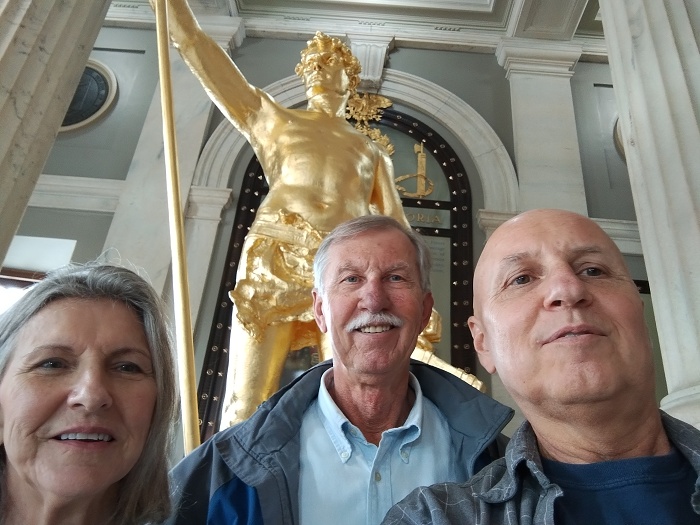
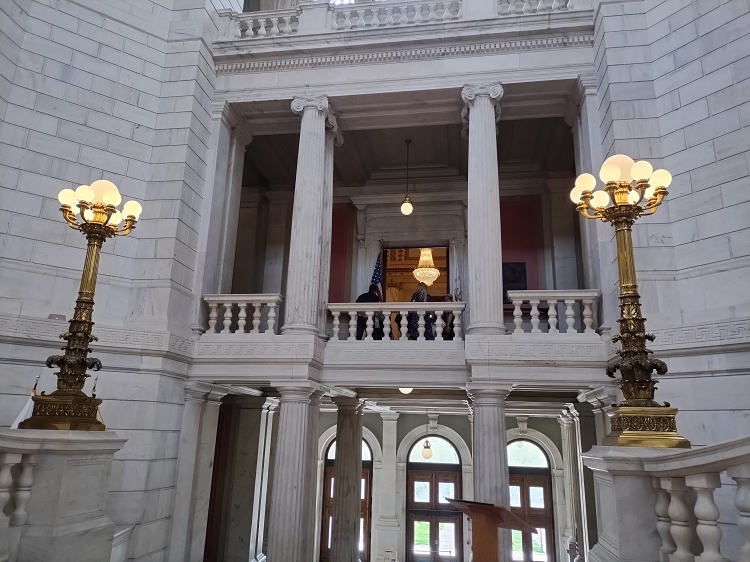
John mentioned that the golden statue of Roger Williams, the
“Independent Man” and founder of Rhode Island, was on display in the State
House in Providence. The statue is
usually perched atop the State House overlooking the city, but had been taken
down for refurbishment. I said I’d
absolutely like to go see it, figuring this was a rare opportunity to see some
Rhode Island history close up (plus a chance for some cheesy photo ops).
 |
 |
 |
Me and the Independent Man statue
|
John, Carol and me with Roger Williams, the Independent Man, statue
|
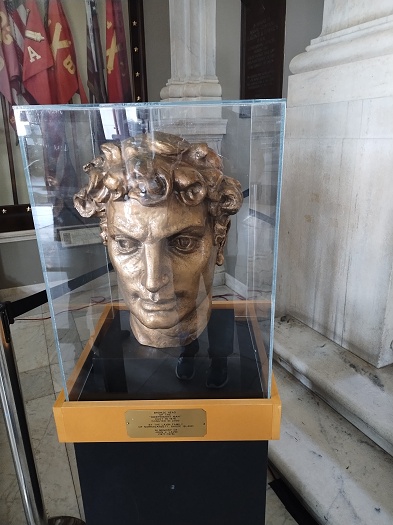
Bronze head of Roger WIlliams
|
 |
 |
 |
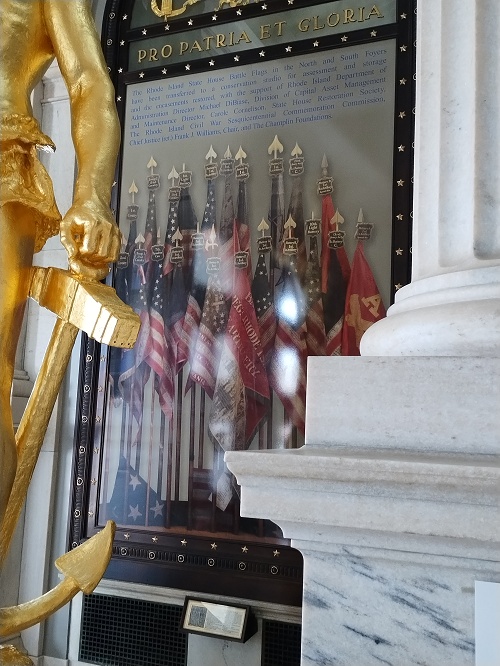
Rhode Island battle flags
|
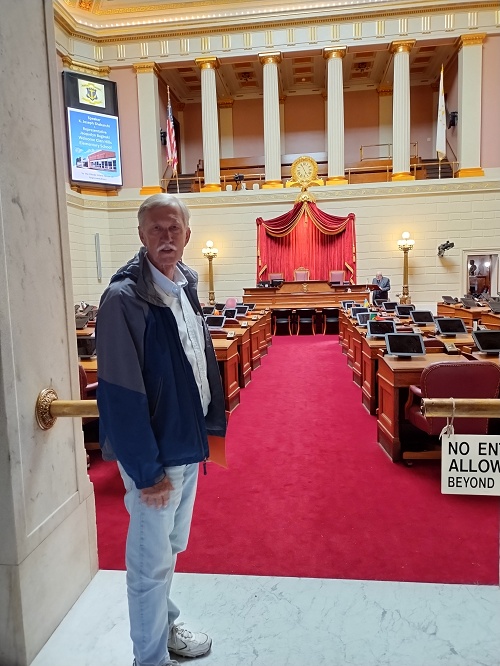
John at the Rhode Island House of Representatives
|
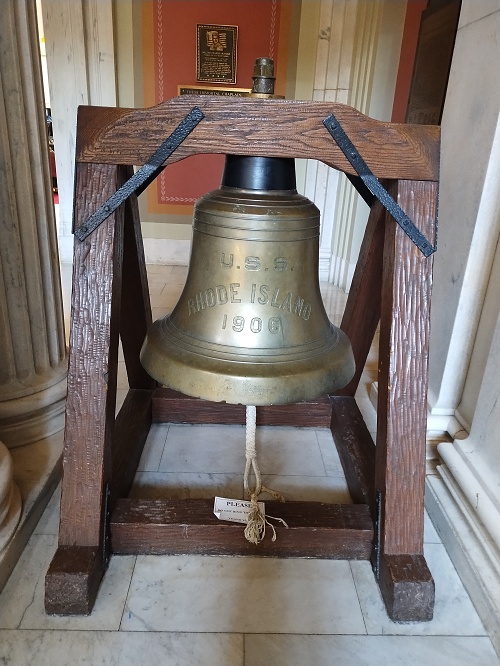
Bell from USS Rhode Island
|
We not only saw the statue and toured the State House, but
also did a little historical tour of Providence that included a visit to
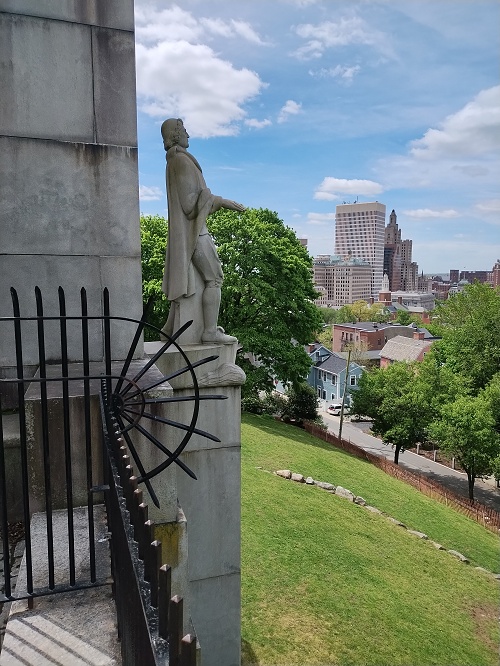
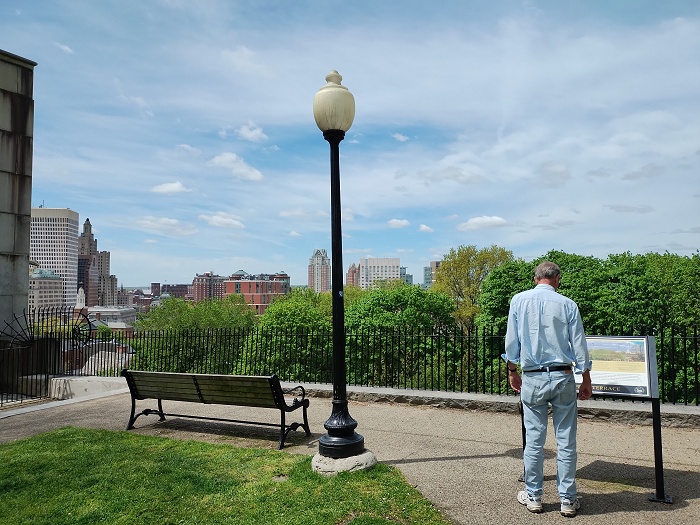
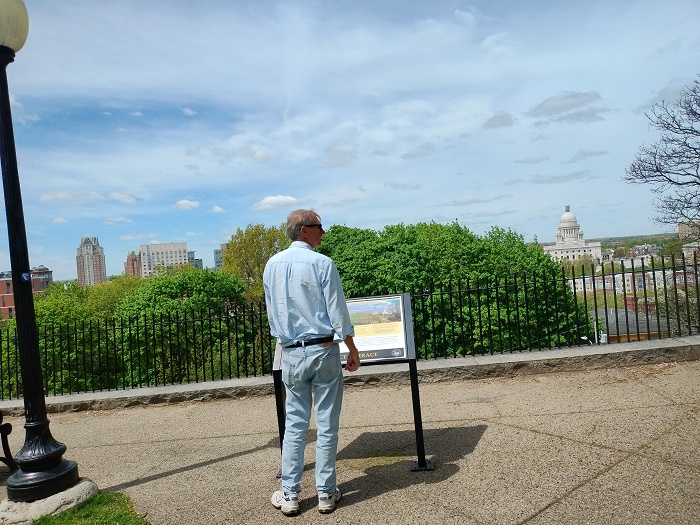
Prospect Hill, a park overlooking the city that has yet another statue of Mr.
Williams. We got lunch at a downtown
deli and ate it in the park.
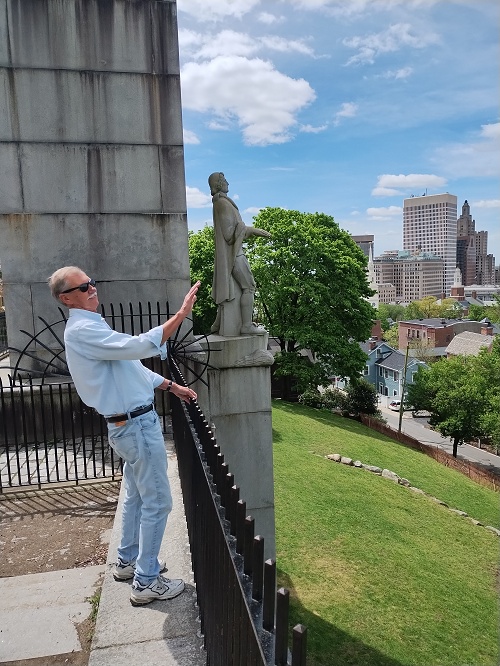
While there, a guided tour group came by. We heard the guide offer a possible explain
of the seemingly odd, belt-high position of Roger Williams’ hand. To me, it looked like he was giving the
NBA-style “too small” taunt to Providence, rather than blessing the city. The guide explained that the statue was built
in the 1930s while Hitler was rising and the sculptors did not want to have the
statue appear to be giving a Nazi salute.
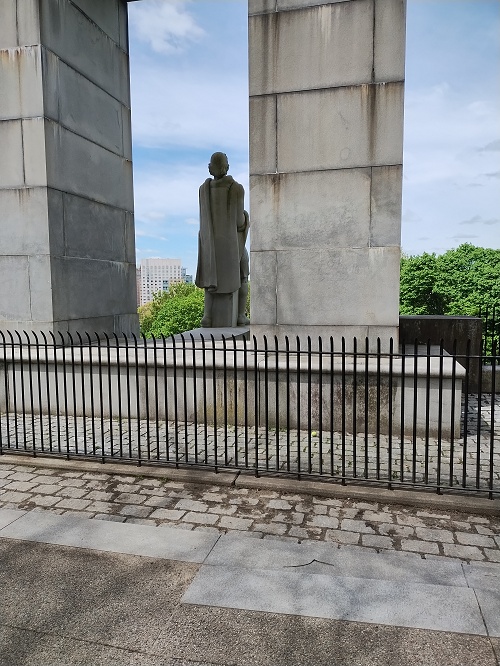
My theory is the statue was supposed to include a dog whose head Roger
was patting (Roger Williams was reported to be an animal lover), but the dog
got cut because the project was over budget.
 |
 |
 |
Roger Williams statue on Prospect Hill
|
John trying to imitate the Roger Williams statue |
Roger Williams statue on Prospect Hill from behind
|
 |
 |
After getting my prostate gold-plated, having a seat cushion
injected into my butt and getting an injection of something similar to what they
give to sex offenders, there was just one more thing to do before the start of
radiation. Two weeks prior to the start
of treatment, I needed to get sophisticated scanning, also known as “mapping”
or “radiation simulation,” done. From
the scans, my radiation oncologist, Dr. Sayan, could “design” the radiation
specifically to target my particular cancer. He had mentioned he would need two weeks to do
this. The fact that Dana-Farber/Mass
General has the most sophisticated scanning equipment was a major reason I
chose to go to Boston to get treated.
Since I would be returning for treatment in a couple weeks, I decided this would be a quick trip. I would fly into Boston and stay there the day before my appointment, then fly right back after my appointments were done. Because I had to had to do some “prep” the night before my appointment, I wanted to get settled into my hotel early in the day. Looking over the JetBlue flight options, I decided my best bet was one of those pre-dawn nonstop flights that I never would have considered otherwise.
I had planned to just take a rideshare from the airport to
the hotel. Since I would be getting
there in the morning, I figured I’d just get something to eat and hang out at
the hotel until I could check in.
However, my brother John surprised me by saying he and my nephew, Andy,
would drive up from Rhode Island and pick me up at Logan (airport). After that, we’d go to lunch and they would
drop me off at my hotel. That made that
first day of this trip much more enjoyable and also simplified the logistics.
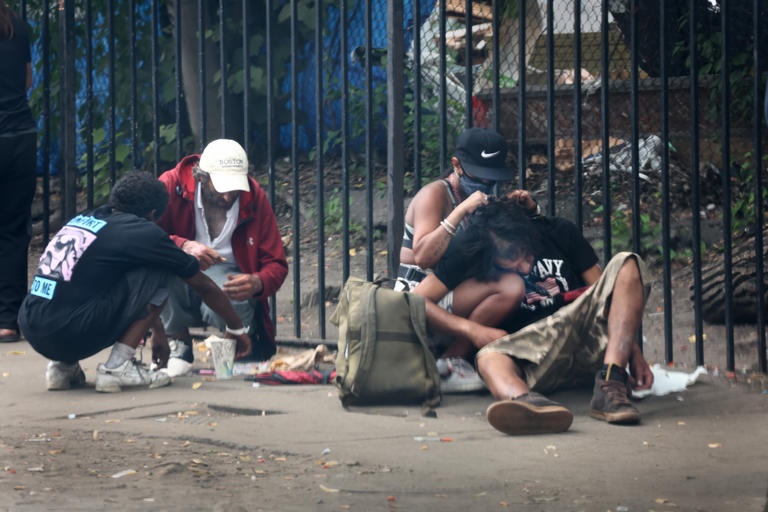
As it turned out, after they picked me up, we drove by the hotel into which I was originally booked and the infamous “Mass and Cass” area. As the nurse I talked to had warned, directly across from the hotel were maybe dozens of strung-out heroin addicts lying around in front of a fence on a vacant lot. Needless to say, I was pretty happy to not be staying there and very grateful to Cheri, the nurse who took it upon herself to warn me about the area.
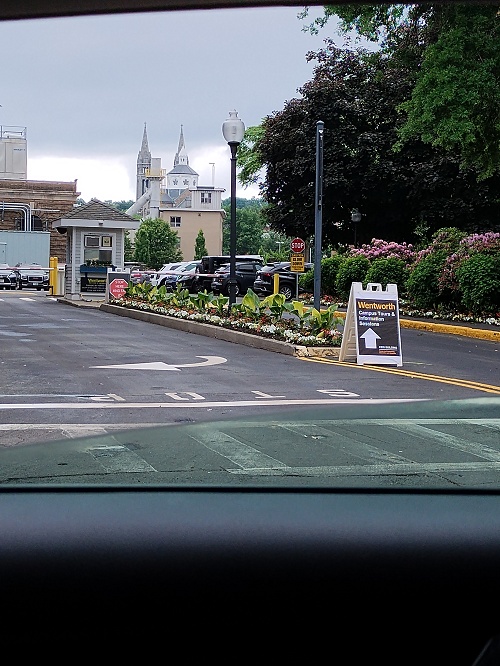
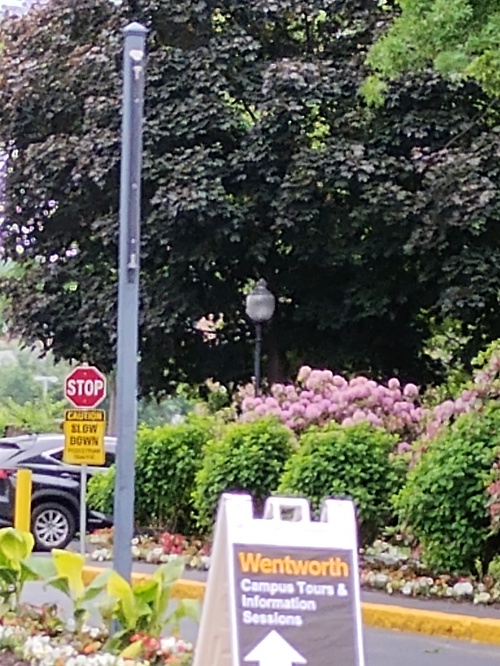
As we were driving through Boston, we also went by one of my
other brother Walt’s alma maters, Wentworth Institute. I took a couple pictures and texted them to
him.
 |
 |
John, Andy and I had a nice lunch at a sports bar-type place
in Brighton, pretty close to my hotel.
After lunch, they dropped me off at the hotel and were on their way,
hoping to beat that afternoon traffic out of the city. The hotel clerk was nice enough to let me get
into my room before the designated check-in time.
This trip marked the first time I had the Dana Farber
lodging department book me a discounted room at the Homewood Suites in
Brookline. Since this was the hotel
where I’d be staying for the duration of my treatment, I figured this would be
a good “trial run” that would give me a chance to familiarize myself with the
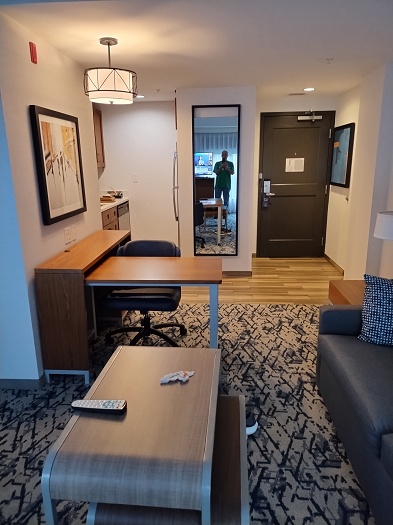
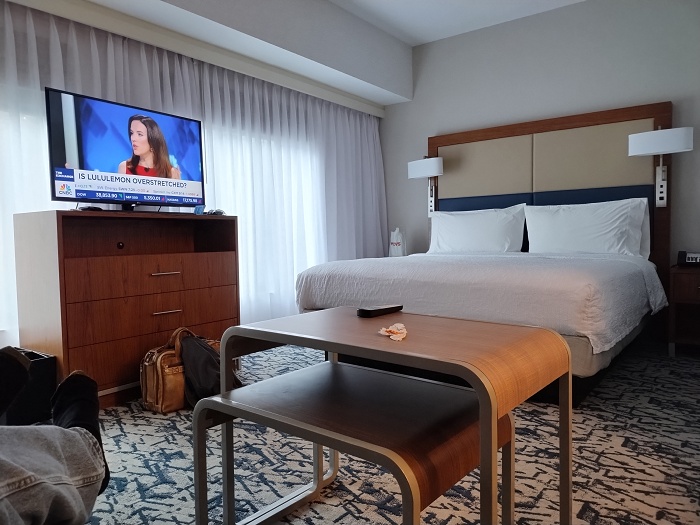
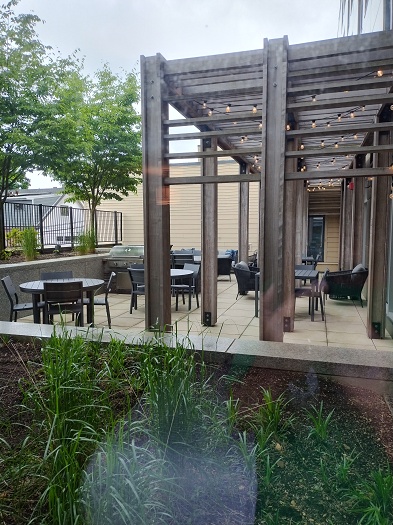
hotel and the area. I took some pictures
to try to show Pat that our room would be nice and comfortable.
 |
 |
 |
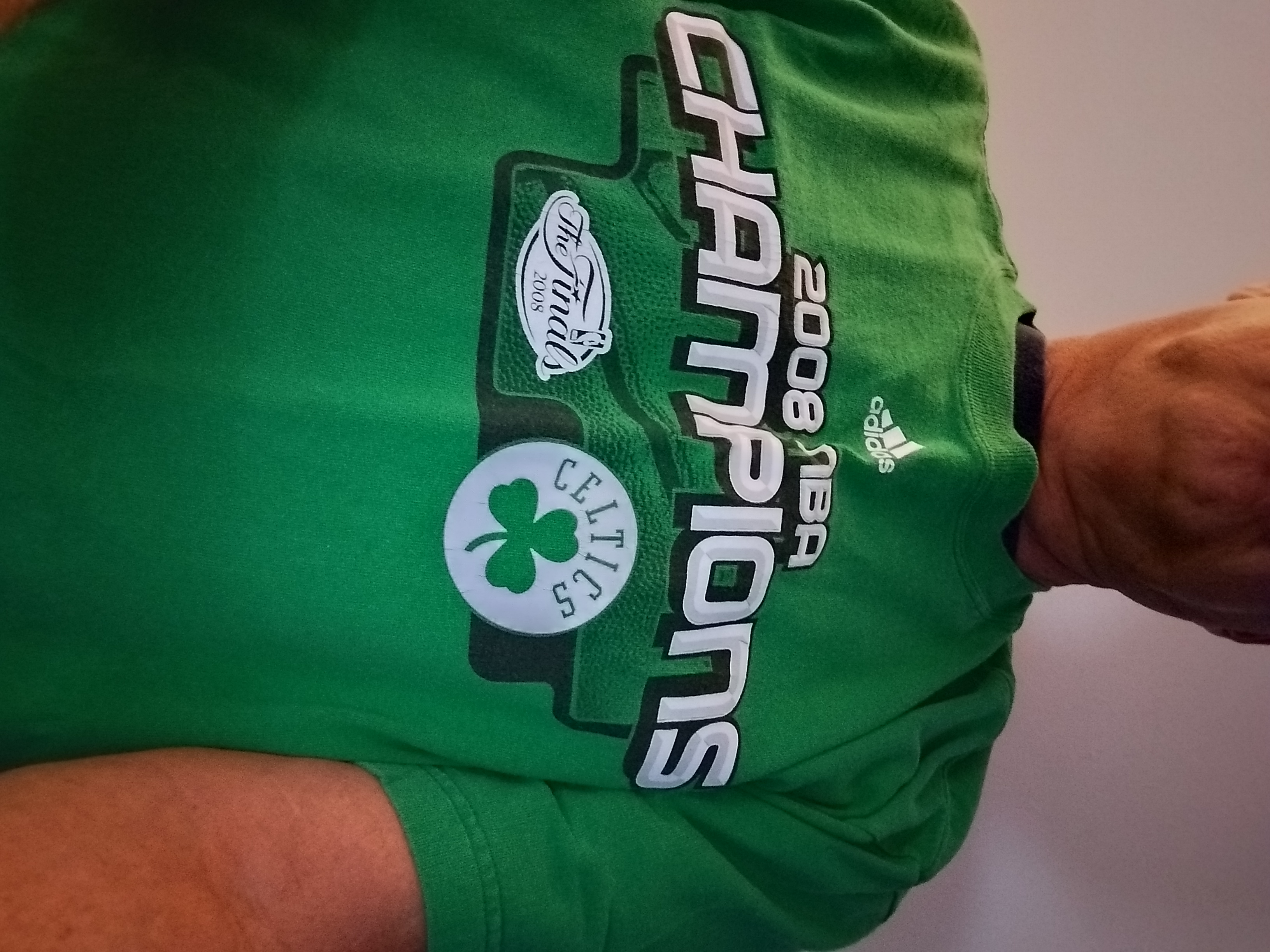
Me in my Celtics shirt in my room
|
My room at Homewood Suites in Brookline
|
Homewood suites courtyard
|
The prep before the mapping was kind of a scaled-down
version of what you do before a colonoscopy, although I only had to stop eating
the night before rather than fasting for a whole day. Much worse than that, I had to administer a
couple enemas to myself to make sure my innards were nice and clean for their
“close-up.” One problem in flying in
from out of town for this procedure was that I couldn’t bring these
liquid-based items in an overnight bag on an airplane (and checking a bag for a
one-night stay just seemed silly). I had
to purchase them at a CVS near where we had lunch.
After chilling in my room in the afternoon, I took a walk to
the downtown area to look for something to eat.
As it turned out, this night would be the first game of the NBA Finals
between my beloved Celtics and the evil Dallas Mavericks, led by uber-villain
and general nut-job, Kyrie Irving. That
day I proudly wore my “vintage” 2008 Celtics Championship T-shirt. As I walked up towards town, I passed by a
parking lot which I later found was for a medical marijuana dispensary. The parking attendant took note of my shirt
and we had a conversation about the last championship team and the anticipation
for the big series starting tonight. It felt
good to be among fellow Celtics fans. I
wound up getting a tasty dinner from an Asian place where you pick your
ingredients to create a customized poke bowl.
As a warning, if you don’t like reading about things that
are slightly “gross” then you might want to skip the rest of this section. After having gathered all the medical
implements I needed and finishing my poke bowl before the designated “no
eating” time, I took the prescribed diuretics and settled in to watch the
Celtics. Luckily, I could see the TV
from the bathroom.
The Celts got off to a big lead and I was enjoying watching
it and texting a little with John about it. Here comes the somewhat gross
part. At halftime, I started administering
the first enema. It didn’t seem to be working right as stuff was squirting all
over the bed in the hotel room.
Eventually I realized there were two caps on the bottle and I had only
removed one—oops.
After the Celtics cemented the victory, I tried to get some
sleep. With my first appointment at 6:30
a.m., I had to set an alarm for 4am to deliver enema number two (so to speak) within
a few hours of the mapping. That one
went more smoothly, although I didn’t get a whole heck of a lot of sleep that
night.
The next day I got up pre-dawn, packed up my scant
belongings, got ready to go, then checked out. Since it was a nice day, I took
what would be the first of many 1-mile walks from Homewood Suites to the Radiation
Oncology Department at Mass General on Francis Street. I had been to this facility in April to get
the results of my PSMA-PET scan.
After I took the elevator down 2 floors and checked in, I
took my seat in the waiting area. Shortly
thereafter, I was greeted by a middle-aged gentleman who was likely a nurse or
some other medical assistant. I could
tell by his soft, quiet tone that his goal was to put patients at ease. He explained the process of the imaging that would
be done and the specifics of where I would change and leave my possessions. He also mentioned he had spent some time in
Florida and knew a “girl” down there—he might have been kind of a throwback
that didn’t subscribe to modern sensitivities when referring to women.
I found that this facility also employed the two-gown
methodology. I’ll reiterate that that
definitely made me feel more comfortable as I was walking the halls, filling
out questionnaires and paperwork, and sitting in waiting rooms.
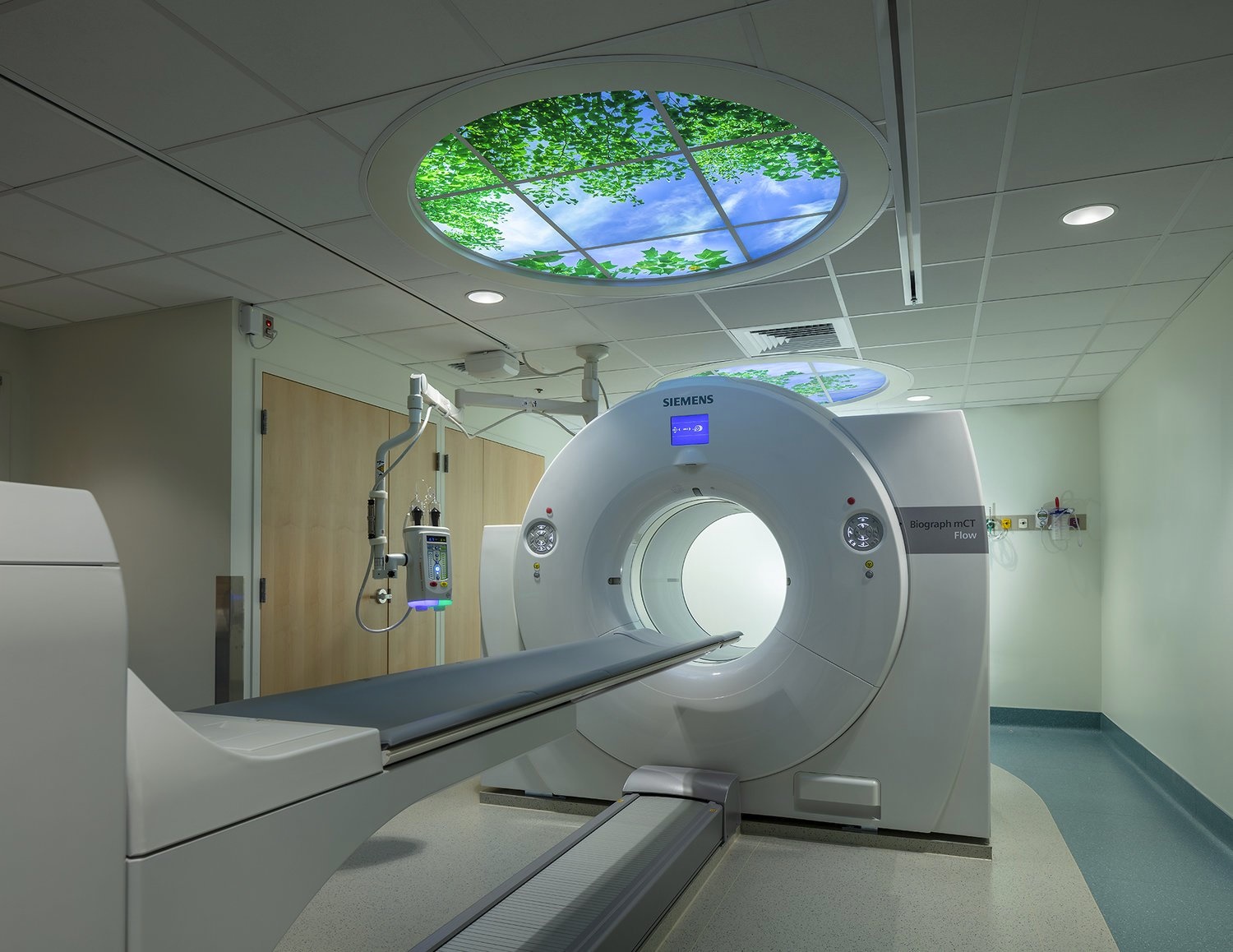
I actually had two scans with two different machines that
day. I believe one was an MRI and the
second a CT scan.
 |
 |
The scanning machines used looked something like this |
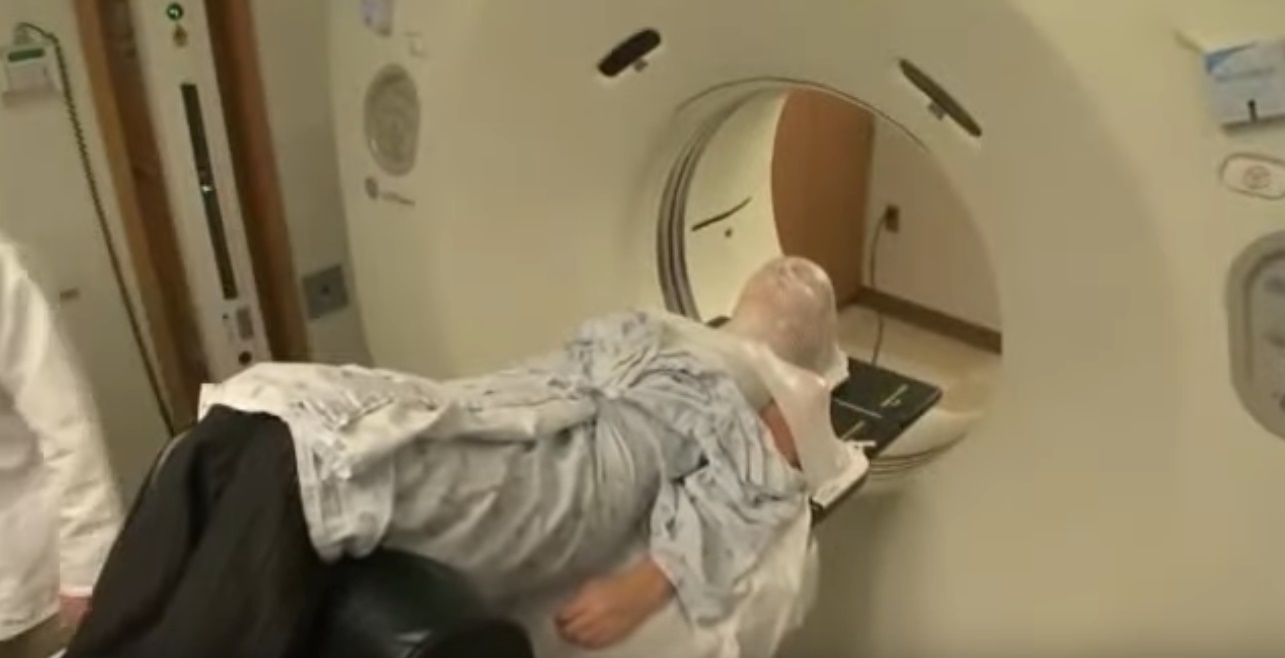
Undergoing radiation "simulation" (I did not require a mask)
|
While waiting in one of the interior rooms between imaging
sessions, I met a man, probably in his 40s, who was also waiting. He asked what I was there for and told him I
had prostate cancer and was getting some imaging done before starting
radiation. He said he was getting
treated for brain cancer for the third time.
As he told me about it, he expressed confidence that it would be taken
care of and seemed to be smiling, apparently focused on positive thoughts about
his outcome. Right about then they came
to bring me in, so I wished him good luck and he did the same. His disposition was amazing to me and made me
realize how lucky I was to have a cancer that was very curable.
The imaging itself was, again, uneventful. By now, I’d been through a few scans,
including long ones, noisy ones, and scans with open or closed tubes, so these
were not anything new.
After the scanning, I changed back from the gowns into my
clothes. I then met with someone from
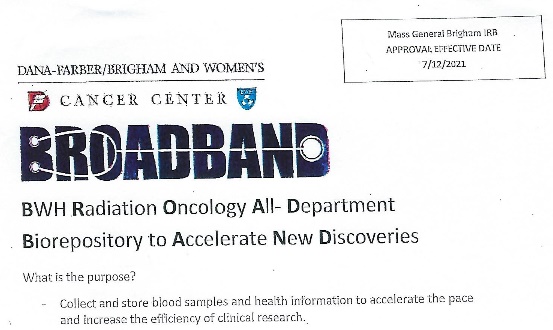
the BWH (Brigham and Women’s Hospital) Radiation Oncology All-Department
Biorepository to Accelerate New Discoveries project, or BROADBAND if the full
name is too much of a mouthful. Associated
with that project is the Mass General Brigham biobank. Essentially, by agreeing to participate in
these programs, you authorize tissue samples and medical data that might be
collected during your treatment to be stored and used in further medical and
genetic research.
My soft-spoken orderly/nurse had told me I would have this meeting and stressed that it was voluntary (he added I could even skip the meeting, if I wanted). I decided to participate and signed the consent forms. I figured I would happily do what I could to potentially help future cancer patients—and I don’t worry about conspiracy theories about what they might be doing with my stored DNA or anything.
My last meeting in the radiation department was with a nurse
who again went over the radiation preparation instructions that I had already
received electronically and discussed over the phone. There were some foods I shouldn’t eat and I
would need to be taking a laxative and anti-gas pill every day. She also, again, went over the expected and
potential side effects.
With all the radiation appointments complete, I walked
through the connected walkway to the Yawkey Center. This is when I first realized that the Yawkey
Center and Mass General-Francis Street were actually physically connected, even
though the facilities are on different streets.
My bloodwork appointment was scheduled for 8:40 but, with
all the meetings in the radiation department, I didn’t get there until after
9. I got my blood drawn just in time to
get up to the 11th floor for my 9:30 appointment with Dr. Serzan at
the Lank Center for Genitourinary Oncology.
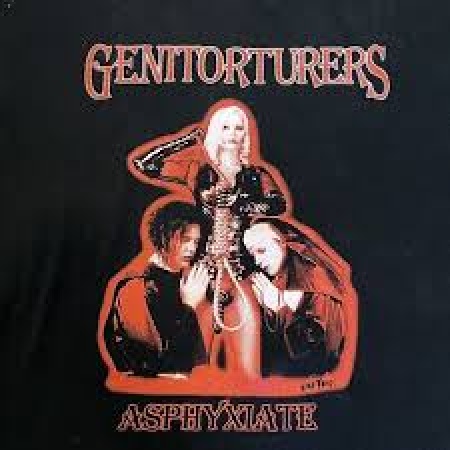
Every time I saw that name I thought of an 80s/90s shock rock band
called the Genitorturers, but I digress.
Dr. Serzan asked about any side effects one month into
hormone therapy and I reported they were minimal to non-existent. He again reminded me to expect urinary
frequency, hot flashes, loss of muscle mass and weight gain. He stressed exercise would help offset the
latter two issues.
While we were talking, my blood results apparently arrived
(on Dr. Serzan’s computer). I was, yet
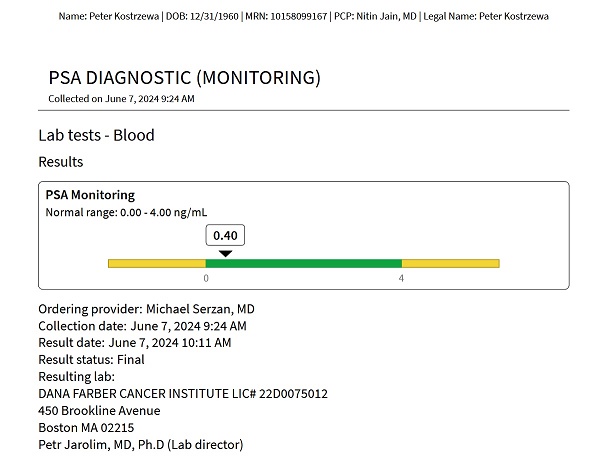
again, impressed that the results were done in only 45 minutes or so. Dr. Serzan told me that the hormone therapy
was working as my PSA had dropped from 4.7 last month to 0.40. At first, I thought this had to be a mistake since
it had dropped 90% in a month, but it was correct.
After the appointment I was off to the pharmacy to get my
next month’s supply of hormone treatment pills.
Again, there was a disappointing wait for my prescription. I was happy I had decided to book a later
afternoon flight back to Florida. After
about 45 minutes or so, I had my pills and booked a Lyft ride to the
airport.
I apparently got bad advice from a security guard about
where to get picked up so, while I waited at the curb, my driver was apparently
in the parking garage. Eventually, he
found me by the front door, although the mix-up forced me to J-walk across the
street to his car and also resulted in an annoying wait charge from Lyft.
The driver’s car was absolutely a piece of crap—even worse
than mine—that made all sorts of funny noises.
As we made our way through Boston, I got the sense we were heading away
from Logan but, since it had been years since I’d done any driving in Boston, I
figured my driver new best. Turns out, I
was correct as he had to take an exit and make a U-turn to get back going in
the right direction. Once again, I was
glad I’d booked the later flight.
I eventually got dropped off in some dark garage far below
the under-construction Terminal C and made my way into the actual
building. Getting through security was another
bit of an adventure. Because of the
construction, the usually somewhat organized ropes and stations had been
replaced with a temporary setup with paper signs. Everything,
including the TSA stations, seemed to have been thrown together in an empty
room, but, as strange as it looked, the setup worked well enough.

Through security with still plenty of time before my flight,
I quickly found the Legal Sea Foods location and celebrated the end of my
pre-radiation appointments with yet more gluten-free fried clams and a
Chardonnay.
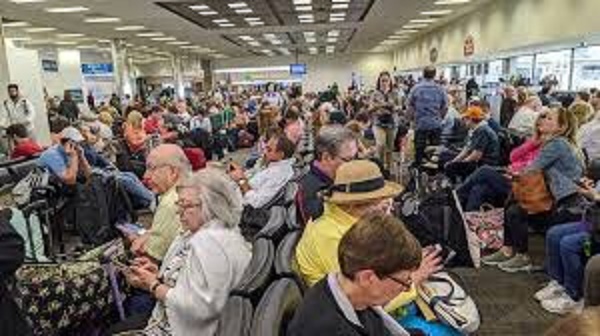
I had to suffer one more annoyance when I got to my gate,
still very early, but found literally nowhere to sit anywhere nearby. I wound up waiting for my flight in a
freezing vacant gate for another airline.
 |
 |
As I waited, I thought about how all the research, decisions
and preparations were done and the big stuff was now just ahead.
| Home |
Previous |
Next |